

When you’re building a custom home, every decision carries weight. But few decisions carry more visual power than the ones you make about your entrance. The entry to your home is the first thing guests see, the last thing you see as you leave, and the moment that sets the tone for everything inside. At Conesso Constructions, as an architectural builder on the Central Coast, we spend a lot of time talking with clients about this exact space, because getting it right changes the entire feel of a home.
So, what actually makes an entrance a statement? It’s rarely one single dramatic gesture. More often, it’s a series of considered, layered decisions that work together to create something that feels intentional and genuinely impressive.
Start With the Front Door
If there’s one element that does the heavy lifting, it’s the front door. It’s the centrepiece of your facade, and it deserves to be treated that way.
Colour is one of the most accessible and impactful choices you can make. A deep charcoal, a rich forest green, a warm terracotta, or a high-gloss black against a neutral rendered facade creates immediate contrast and personality. On the Central Coast, where coastal and contemporary architecture often blend together, these bold colour choices read beautifully against natural timber, textured render, or limestone cladding.
The style and scale of the door matters just as much. Oversized pivot doors are a favourite in architecturally designed homes right now, and for good reason. They signal arrival. They create a sense of occasion. Double doors or a door with full-height sidelights also work exceptionally well when you want to borrow natural light into the entry without compromising on presence.
Hardware is the finishing touch that many people underestimate. A sculptural door handle, a long architectural pull bar, or even a substantial brass knocker can shift a good door into something that genuinely stops people in their tracks.
Frame the Door With Architecture
A beautiful door in an unremarkable frame is a missed opportunity. The architecture surrounding your entrance, whether that’s a deep-set reveal, a bold portico, columns, or a feature wall in a contrasting material, is what elevates the door from a functional element to a design moment.
Cladding a feature wall around the entrance in a different material from the rest of the facade is a technique that works consistently well. Natural stone, raw timber battens, or textured masonry draw the eye directly to the entry point and give the facade a layered, considered quality. As a custom home builder on the Central Coast, Conesso Constructions works closely with architects to ensure these material transitions are detailed properly, because the quality of those junctions is where craftsmanship is most visible.
Overhead framing is also worth thinking about carefully. A pergola structure, a louvred roof, or even a substantial canopy over the entry creates a defined threshold moment. On the Central Coast, this also serves a very practical purpose, offering shade and shelter given the climate. When a climbing plant like a fig, wisteria, or star jasmine is trained across this structure over time, it adds a softness and texture that no amount of hard landscaping can replicate.
The Pathway Sets the Tone Before You Arrive
The experience of approaching a home begins well before the front door. The pathway is where anticipation is built, and it deserves the same level of attention as any other design element.
Wide, generous paving immediately communicates confidence. Oversized concrete slabs, dark basalt pavers, or a honed natural stone create a sense of arrival rather than simply a route from the street to the door. The width of the path matters too. A pathway that is noticeably wider than the standard feels welcoming and generous, and it photographs beautifully.
The choice between a straight path and a gently curved one is worth discussing with your designer. A straight path reads as formal, ordered, and intentional. A soft curve feels more relaxed and organic, allowing you to incorporate planting on either side that frames the view of the home as you approach. Both approaches can work brilliantly depending on the overall design language of the home.
Material continuity between the external pathway and the interior entry floor is a detail that the best architectural homes get right. When the same or complementary material runs from outside to inside, it creates a sense of flow and spatial expansion that feels cohesive rather than disconnected.
Lighting Changes Everything After Dark
It would be easy to treat lighting as a purely functional consideration at the entry. That would be a mistake. Lighting is one of the most powerful tools in creating atmosphere, and a well-lit entrance after dark can be just as impressive as the entrance in daylight.
Flanking the front door with architectural wall sconces creates symmetry and a sense of occasion. A dramatic pendant or oversized lantern hung from a portico ceiling adds warmth and draws the eye upward. Subtle ground-level path lighting defines the approach without overwhelming it.
The key is to layer the light sources rather than relying on a single overhead fixture. A combination of uplighting on architectural features, soft pathway lighting, and focused door lighting creates depth and dimension that makes the entrance feel genuinely considered. For Central Coast homes, where outdoor living and kerb appeal are both priorities, this kind of thoughtful lighting strategy is worth the investment.
Planting and Landscaping Bring the Entry to Life
Symmetry is one of the most reliable tools in creating a formal, polished entrance. Matching potted plants on either side of the door, whether that’s clipped topiaries, olive trees, standard roses, or tall ornamental grasses, immediately creates a sense of balance and intention.
For homes with a more relaxed coastal sensibility, asymmetric planting with native species can be just as striking. Lomandra, Westringia, and coastal Banksia all work beautifully in Central Coast gardens, and they’re low maintenance once established, which is always a practical consideration.
Green walls or vertical planting elements are becoming increasingly popular in architecturally designed homes on the Central Coast. When incorporated into an entry wall or flanking a pathway, they add texture, softness, and a point of difference that is genuinely memorable.
The Interior Entry: Where the Experience Continues
A statement entrance doesn’t stop at the front door. The interior foyer or entry space is where the design language of the whole home is first communicated, and it deserves the same attention as the exterior.
The light fixture is often the first thing the eye travels to when the door opens. An oversized pendant, a sculptural chandelier, or a striking architectural light fitting signals immediately that this is a home where design has been taken seriously. The ceiling height of the entry is also worth discussing early in the design process with your architectural builder on the Central Coast, because a double-height void in the entry creates an immediate sense of grandeur that sets the tone for the entire home.
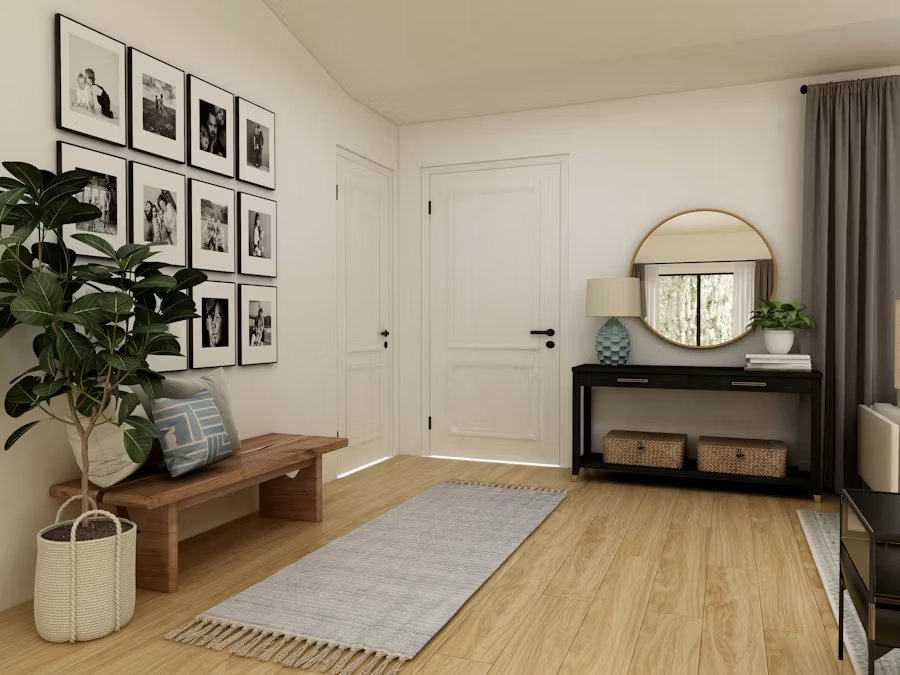
A well-chosen console table, a large-format mirror, and a single piece of art or sculpture give the entry a sense of purpose and personality without overcrowding the space. The entry should feel like an arrival, not a corridor. Keeping it relatively uncluttered, with a few high-quality pieces rather than many small ones, is the approach that works best in architecturally designed homes.
The Thread That Ties It All Together
The entries that make the strongest statements aren’t necessarily the ones with the most design elements. They’re the ones where every element feels like it belongs. The colour of the door is echoed in the planting pots. The paving material flows inside. The hardware style is consistent with the fixtures in the foyer. The lighting speaks the same visual language inside and out.
This kind of cohesion doesn’t happen by accident. It’s the result of a collaborative process between homeowner, architect, and builder. As a Central Coast builder working in the custom and architectural space, Conesso Constructions understands that these details are where a truly great home is made. They’re also where a home that simply looks good becomes a home that genuinely moves people.
If you’re planning to build an architecturally designed home on the Central Coast and want to talk through how to create an entry that does justice to the rest of your design, get in touch with the team at Conesso Constructions.